I help people start a career as a user researcher in the games industry, and unlock better playtests for game developers.
Are you running ineffective playtests within your studio? [🎮 gamesuserresearch.com]
Run better internal playtests |
Many studios spend a few hours each Friday playing their own game. This 'dogfooding' is hugely important for understanding the current state of the build, get a feel for the game, and getting some rough feedback on current design decisions. But I also hear complaints. Teams tell me that:
This is a huge wasted opportunity, and a lot of time is wasted on ineffective internal playtests. Get more from your internal playtestsIn this month's playtest masterclass post, we look at how to make the most from your internal playtests, and be gathering useful data from those sessions.
Next month we'll be looking at how games user research can help in different stages of the development process and launching my Get Your First 100 Playtesters free video course. Have a great month! Steve |
Suite 1, The Courtyard, The Old Monastery, Windhill, , Bishop's Stortford, Hertfordshire CM23 2ND |
Steve Bromley - gamesuserresearch.com
I help people start a career as a user researcher in the games industry, and unlock better playtests for game developers.
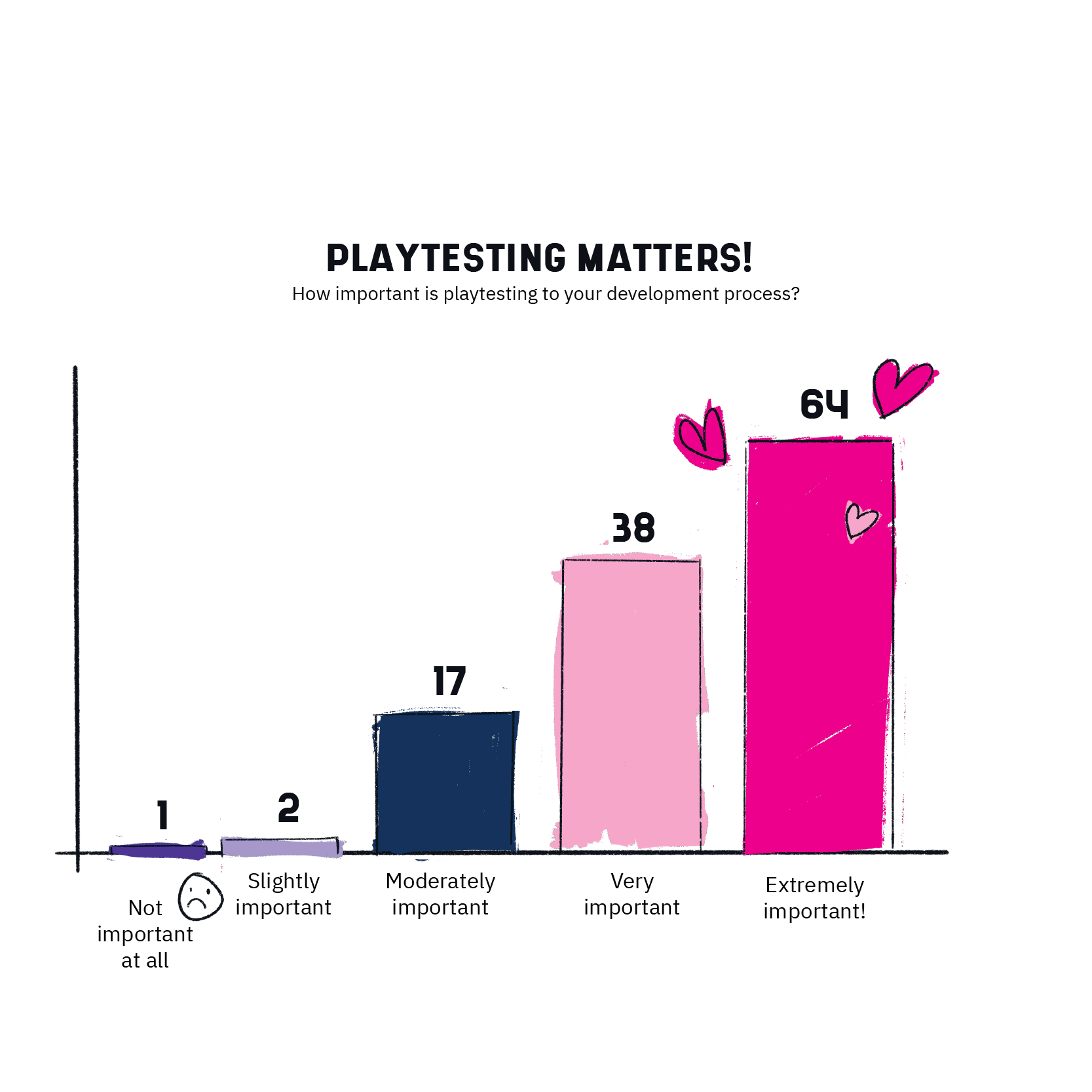
Hello friends! You may remember we spent the first half of 2023 asking developers about their playtesting habits - what do they playtest, when do they playtest, how often, and what problems they face. We had hundreds of responses, which far exceeded my expectations. I'm really glad to share that Jackson Herd and myself have finished combing through the results, and are ready to share what we learned! What did we learn about playtesting? Some highlights (including fantastic illustrations from...
gamesuserresearch.com Define your players "Who are my players" is a valuable question for any game developer to ask. Vague (or non-existent) definitions of your players will make it harder to make good design decisions, harder to target players with marketing, and will lead to inaccurate playtest conclusions. But many player definitions are vague, or unhelpful. In this article, I've explored why it's valuable to define your players - shared what a bad definition looks like, and the steps...
gamesuserresearch.com Do you know enough about games to work in the industry? If you want to work in games user research, you need to: Be confident running user research studies Understand enough about game development to work out where you can help. Many people coming from other industries, or academia, have a lot of experience running user research. But they often struggle with the latter - showing they know enough about game development to convince hiring managers. An introduction to game...